
U.S. Exports of Dollar Banknotes (1970–2025)

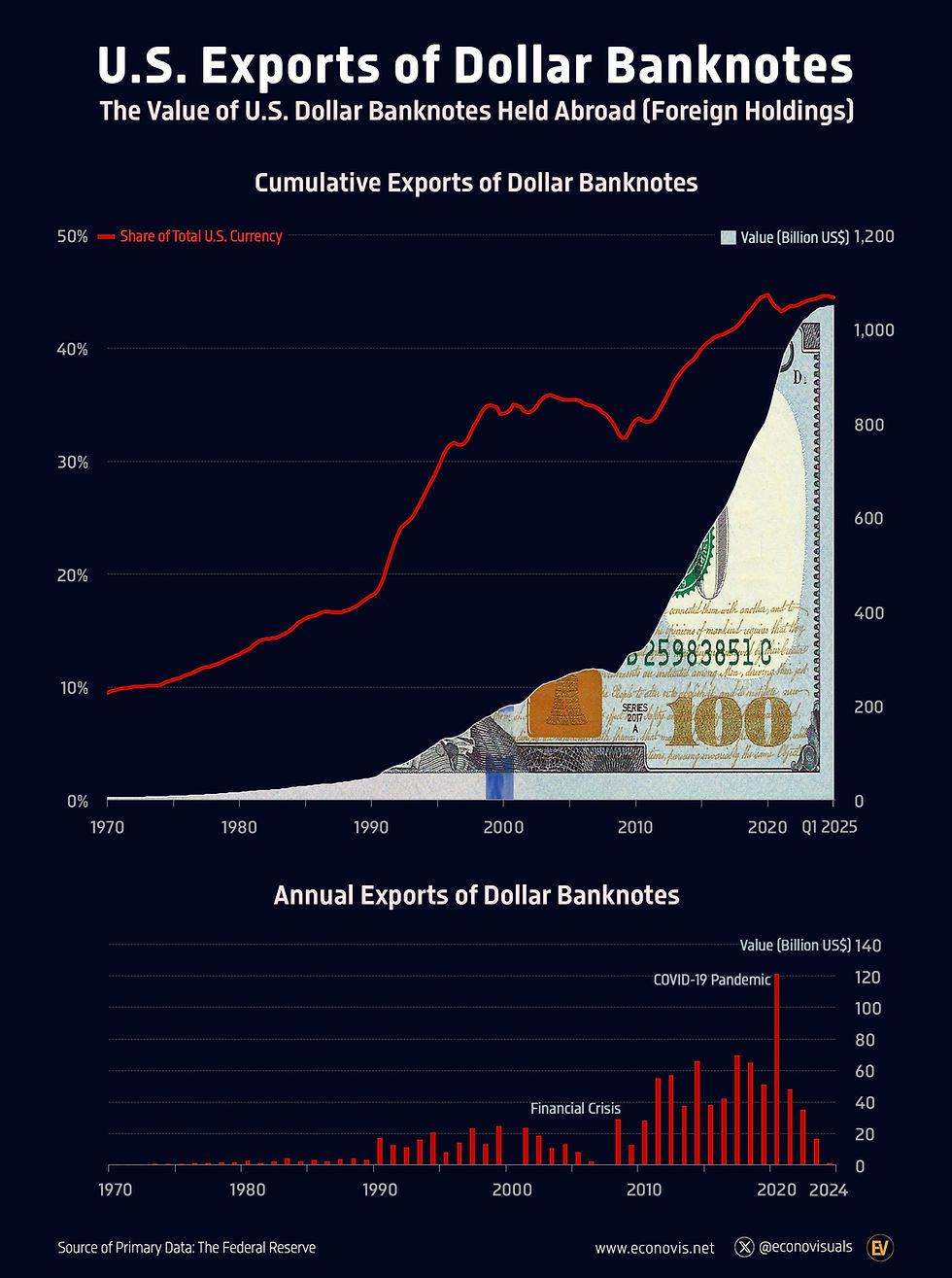
U.S. most profitable “export” is not mineral fuels, machinery, airplanes, or vehicles—it is the U.S. dollar itself. By Q1 2025, U.S. currency held abroad reached $1.05 trillion, representing 45% of all U.S. currency in circulation. From 1970 to 2025, foreign-held U.S. banknotes grew at a 10.1% annual rate, rising from just $5.4 billion to more than a trillion, compared with 7.2% annual growth for total U.S. currency in circulation. The sharpest surge occurred between 2008 and 2021, when overseas holdings jumped by $700 billion. The historical peak came during the 2020 COVID-19 pandemic, with an unprecedented $121 billion (15%) increase in a single year. Since 2022, however, foreign demand for U.S. banknotes has plateaued, showing little change through 2025—a shift partly reflecting the rise of digital payment systems and cryptocurrencies.


Can't u argue that those dollars circulating abroad effectively earned a rate of return as they allowed the issuer (the Treasury) to issue what turned out to be zero-interest rate IOUs to purchase imports? My question is, what rate of return should we ascribe to those IOUS? Did they earn the U.S. inflation rate because they depreciated in value in "buying power" or redemption value by the U.S. inflation rate, or should we argue that they earned the interest rate paid on U.S. Treasury debt outstanding for the time period they remained overseas? Or maybe there's an argument for a rate different from either of those two rates?
You might be tempted to argue that they earned nothing, but the…